Lithium-ion battery fires
How Hydrogel works
“Hydrogel is a thermal runaway blocker”
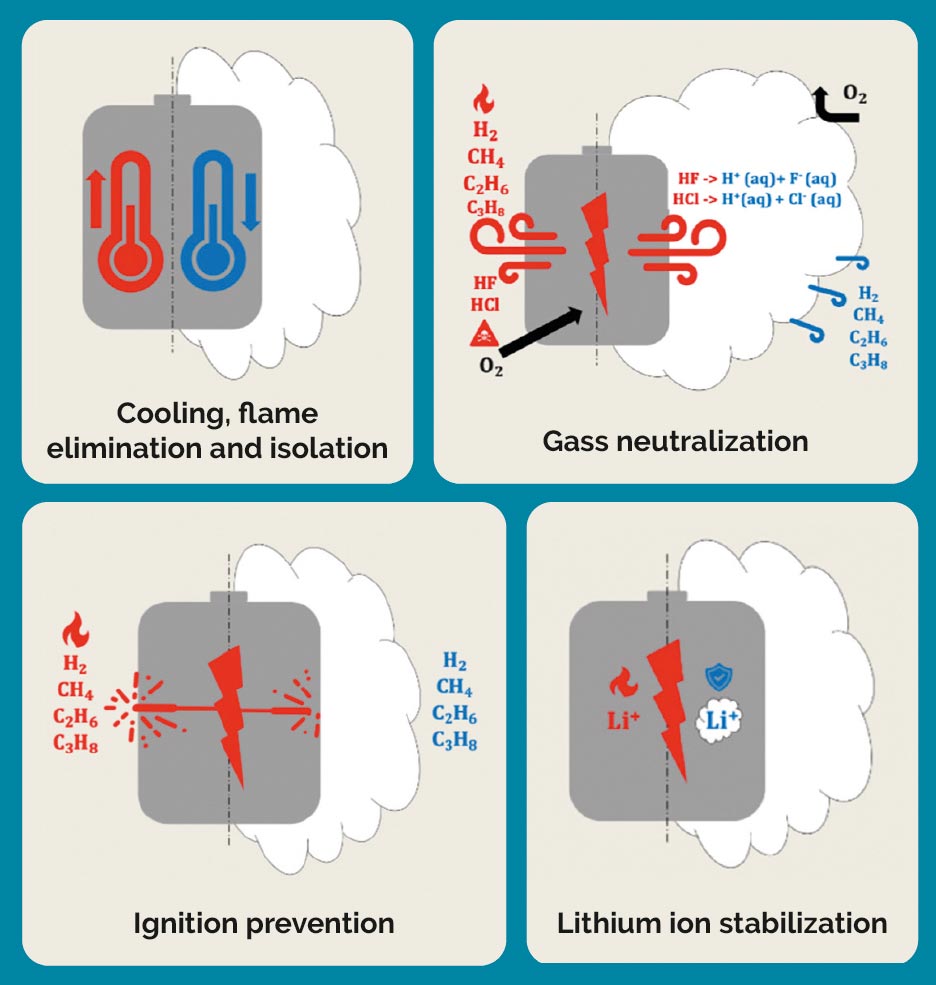
Hydrogel uses multiple advanced extinguishing mechanisms that work together to effectively control and terminate lithium-ion battery fires.
1. Rapid cooling and flame extinguishment
Hydrogel contains a high water content that instantly absorbs heat, eliminates flames and rapidly lowers battery temperatures. The gel adheres to hot surfaces, providing continuous cooling and preventing thermal runaway escalation.
2. Thermal isolation
The hydrogel forms a protective barrier around the battery cells, limiting heat transfer and preventing thermal propagation to adjacent cells. This helps contain the fire and reduces the risk of re-ignition.
3. Gas suppression & neutralization
During lithium-ion battery fires, dangerous gases such as hydrogen (H₂), methane (CH₄), and hydrogen fluoride (HF) are released. Hydrogel helps reduce flammable gas concentrations, neutralizes toxic compounds, and suppresses combustion by limiting oxygen availability.
4. Lithium-ion stabilization
Special clay particles within the hydrogel penetrate the battery structure and capture reactive lithium ions (Li⁺). This reduces chemical reactivity inside the battery and contributes to complete fire termination and long-term stabilization.
5. Re-ignition prevention
Through sustained cooling, battery insulation and ignition blocking, Hydrogel prevents the battery from reigniting – one of the biggest challenges in lithium-ion battery fire suppression. Together, these mechanisms make Hydrogel a unique and highly effective solution for lithium-ion battery fire safety.